
Table of contents
In July 2026, UK workshops are flooded with customers seeking pre-holiday servicing and safety checks before their long summer drives. Indeed, the traditional mechanical handbrake has almost entirely vanished, replaced by Electronic Parking Brakes (EPB) on nearly all modern vehicles. Consequently, mastering the diagnostic service mode for EPB is no longer an optional skill, but a daily necessity for independent technicians.
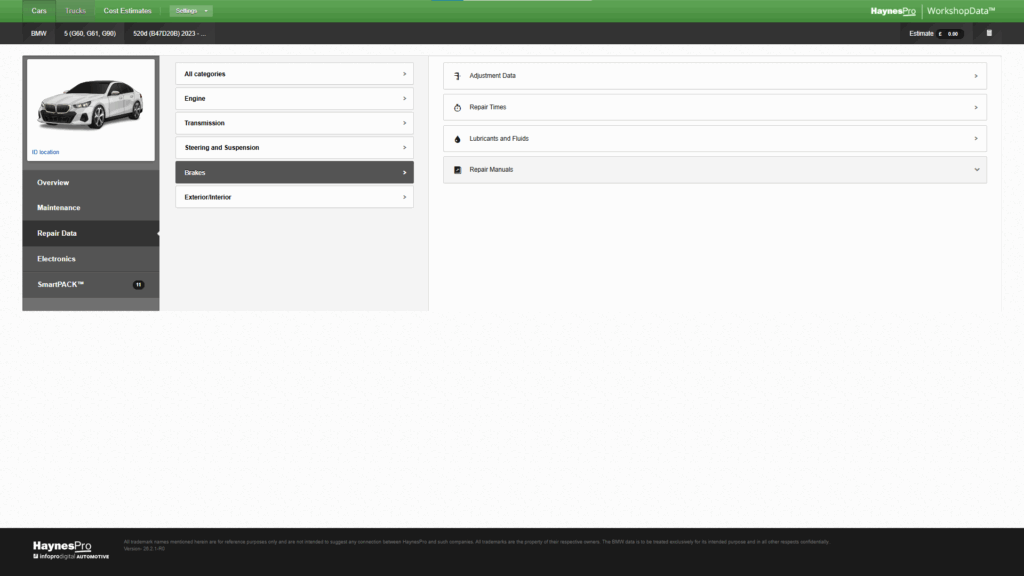
In this context, bypassing electronic procedures is a recipe for disaster. Therefore, integrating HaynesPro through MecaInfo provides UK mechanics with the exact OEM diagnostic protocols required to safely retract brake calipers. Thus, workshops can perform routine pad replacements swiftly without risking catastrophic component failure right before a customer’s holiday.
Why this evolution is critical in the modern workshop
Currently, EPB systems feature powerful electric motors integrated directly into the rear brake calipers, gripping the brake discs with immense force. However, the summer rush often tempts busy technicians to save time by mechanically forcing the piston back without establishing communication with the ABS/ESP control unit.
As a result, the impact of ignoring the correct electronic protocol is devastating for your garage operations:
- Financially: Destroying the internal worm gear of a high-end electronic caliper results in a massive replacement bill, completely wiping out the profit margin from a simple brake job.
- Organisationally: A vehicle trapped on a ramp with permanently locked rear brakes paralyses your workflow during the busiest month of the year.
- Legally: Releasing a car with a compromised emergency braking system exposes the workshop owner to severe liability, a critical safety compliance issue closely regulated by the Driver and Vehicle Standards Agency (DVSA).
For example, a frequent mistake is disconnecting the vehicle’s 12V battery and attempting to rewind the caliper piston using traditional manual wind-back tools. Without receiving the electronic command from a diagnostic tool to enter “service mode”, the internal mechanism remains rigidly locked. Consequently, the applied physical force snaps the actuator, rendering the entire unit useless and leaving the car immobile
Solutions and methods to secure your servicing
Nevertheless, when following the correct technical data, EPB maintenance remains a highly profitable and straightforward service. Here are the essential best practices to implement in your workshop:
- Always activate the specific electronic service mode using a diagnostic scan tool before attempting to remove the rear wheels or brake calipers.
- Follow the precise torque settings and greasing guidelines for guide pins as specified by OEM data, adhering to the safety standards promoted by the Institute of the Motor Industry (IMI).
- Perform a full electronic calibration and pad thickness adaptation once the new pads are installed, ensuring correct clamping force before returning the vehicle.
- Educate your customers on the importance of properly bedded brakes for their heavily loaded summer journeys, using guidance from the Society of Motor Manufacturers and Traders (SMMT).
Strategic conclusion
In summary, modern braking technology has completely eliminated the margin for mechanical guesswork, especially during the critical summer rush. Therefore, by strictly adhering to electronic service protocols, your workshop guarantees the safety of holidaymakers while protecting its own profitability.
Ultimately, maintaining this level of operational excellence requires the best technical support available. HaynesPro stands as the definitive technical data solution for UK garages, offering unparalleled OEM-based diagnostics, wiring diagrams, and repair times. By choosing HaynesPro through MecaInfo, you equip your workshop with the ultimate digital toolkit to diagnose, repair, and thrive in the connected automotive era.
Read :Advanced Automatic Transmissions (DCT & e-CVT): The critical need for OEM
Take a look : Matrix LED & Smart Lighting: Why headlight replacement in 2026 requires specialized
Read next:Video Vehicle Health Checks (VHC): Building trust and increasing average invoice